
63.7 Kilometres of QIMC Seismic Data Reach the Processing Stage
The field crew has finished in Cumberland County and the data is with a Calgary processor, and SEDI filings published during the session show two insiders adding 95,000 shares between them.
Quebec Innovative Materials Corp. (CSE: QIMC) said on 14 October 2026 that it had finished acquiring 63.7 line-kilometres of 2D seismic across its Nova Scotia multi-gas district, expanded from a planned 50 kilometres, with Earth Signal Processing of Calgary now working on the data. Filings published on SEDI during Thursday's session record 95,000 shares bought on 14 October by the president and chief executive through a holding company and by a senior officer through another. The shares closed at C$0.385.
By Élise Galarneau8 min read
Seismic acquired
63.7 line-kilometres of 2D
Apple River to Port Greville, Cumberland County, Nova Scotia; expanded from a planned 50 km; acquired by Echo Seismic Ltd., processing by Earth Signal Processing Ltd. (company release, 14 October 2026).
Insider purchases filed
95,000 common shares
55,000 by John Ioannis Karagiannidis indirectly through Zadkiel Holdings at C$0.4083 to C$0.4125, and 40,000 by Riccardo Ursino indirectly through 2703614 Ontario Ltd. at C$0.4100; transactions dated 14 October 2026, filed 15 October 2026 (SEDI).
Closing price
C$0.385
15 October 2026 close, day range C$0.355 to C$0.40, VWAP C$0.373 (QuoteMedia).
Exchange volume
1.34 million shares
about 2.2 times the 604,901-share 30-day average, plus 1.50 million shares on alternative trading systems, 15 October 2026 (QuoteMedia).
Cash, equivalents and securities
C$14.84 million against C$1.92 million
C$14.13 million cash and cash equivalents plus C$0.71 million marketable securities, against total liabilities of C$1.92 million, as at 30 June 2026 (unaudited condensed interim consolidated financial statements).
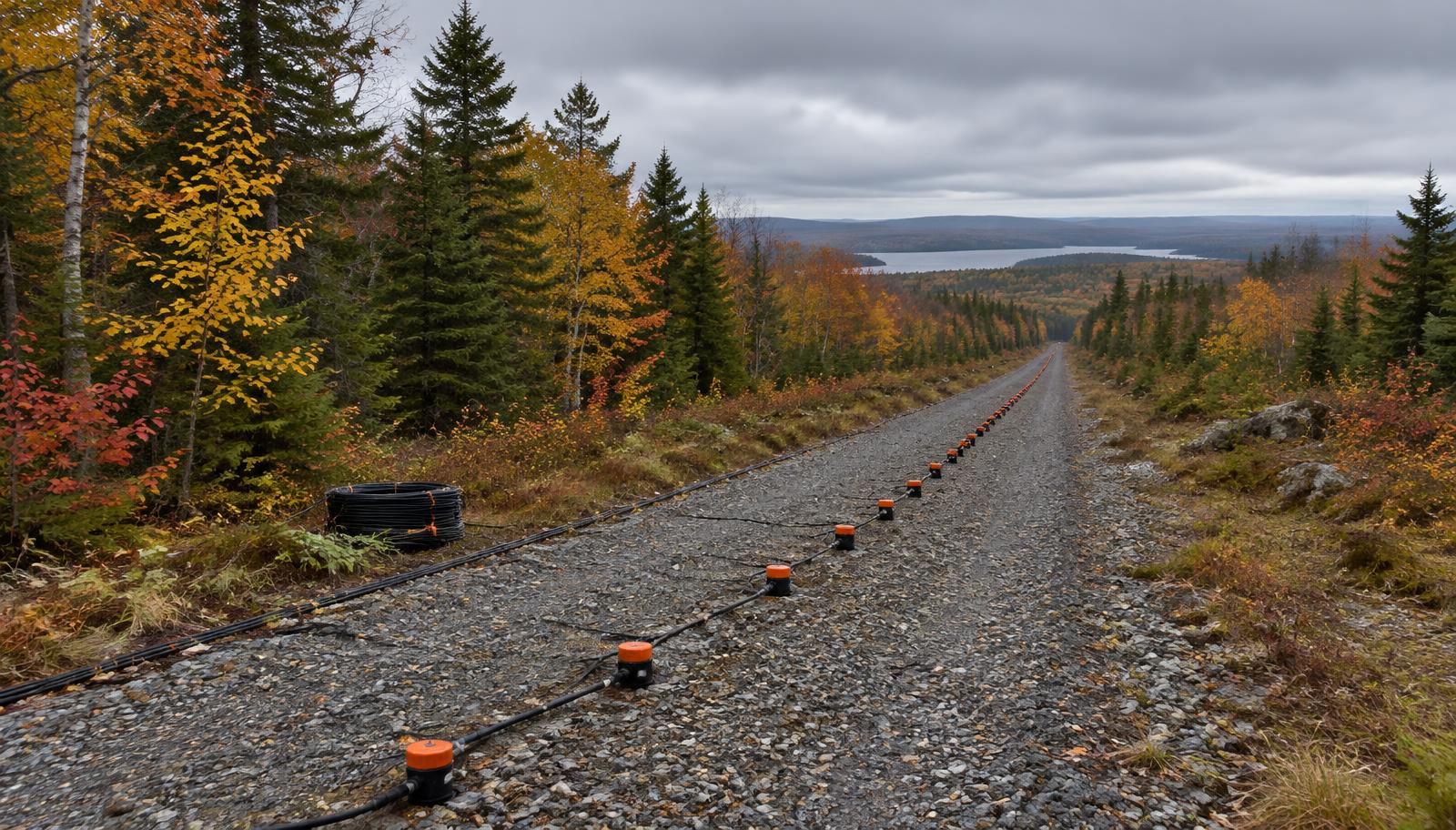
Three gases, one fault system, and now the seismic to map it. Quebec Innovative Materials Corp. (CSE: QIMC) said on 14 October 2026 that field acquisition is complete on 63.7 line-kilometres of 2D seismic across its Apple River, Advocate, Bennett Hill and Port Greville ground in Cumberland County, Nova Scotia, and that the data is already with Earth Signal Processing Ltd. in Calgary. Echo Seismic Ltd. ran the lines.
The programme grew twice while the crew was still in the field, from 42 kilometres to 50 in September and then to 63.7, because new hot zones for natural hydrogen, helium and natural gas kept turning up during acquisition. In the release, John Karagiannidis, president and chief executive officer, gave the reason simply: every new hot zone deserved coverage. According to the company, every anomalous zone it has mapped is now crossed by at least one line.
Three gases on one structure
The seismic lands on top of a busy autumn of results.
On 6 October 2026 QIMC reported soil-gas results from its New Salem-Apple River programme, measuring the light hydrocarbons methane through butane (C1 to C4). The signature was overwhelmingly thermogenic, meaning gas generated by heat and burial deep in the rock rather than by shallow biology. Wet gas made up 86 per cent of the classified samples, dry gas 8.7 per cent and the condensate-to-oil range 3.4 per cent; biogenic and mixed signatures together came to roughly 2 per cent. The analyses were run by GeoFrontiers Corporation, an independent laboratory in Wichita Falls, Texas.
The strongest ethane anomalies sit over a regional gravity low just west of New Salem. QIMC's consultant, Prof. Marc Richer-Laflèche of the Institut national de la recherche scientifique, interprets that low as a thickening sedimentary sub-basin and a candidate gas kitchen: the buried zone where organic matter is cooked into gas before it migrates upward.
That was the third major result from the area in about two weeks. In late September the company identified three fault-controlled helium zones at New Salem-Apple River, including an unbroken 800-metre run of anomalous stations in Zone C, the strongest helium readings in its programme. Farther east along the same corridor, hole DDH-26-05 at Bennett Hill returned gas readings of up to 30.0 per cent hydrogen on 1 September 2026, and free gas reached surface under pressure.
QIMC's geological model ties the three together along the 43-kilometre Apple River-Kirkhill corridor. Thermogenic gas tracks the sedimentary basin, helium sits above a deep magnetic body cut by a fault the company calls F-III, and hydrogen takes over toward the Cobequid Highlands, where the sedimentary cover thins. "Step back and look at what QIMC now holds in Nova Scotia: two districts, one basement structure, three gases," Karagiannidis said. "This district keeps getting bigger."
What the seismic is built to answer
Everything QIMC has published from Nova Scotia so far measures gas at or near surface, or gas brought up a drill hole. Seismic adds the third dimension. A 2D survey sends a sound pulse into the ground and times the echoes coming back off rock layers, and the processed result is a cross-section showing where those layers sit, where they are broken, and where a fault might have carried gas upward or trapped it beneath a seal.
That last point is the one to watch. The lines were designed to image the faults and candidate structures beneath the surface anomalies and to test whether the Windsor Group evaporites lie under the fairway. Evaporites are salt and gypsum layers left by ancient seas, and in this region they are the most effective seal: a cap that holds gas in place instead of letting it leak away.
Earth Signal is processing the new lines alongside what QIMC describes as the most complete natural hydrogen dataset in Canada: more than 10,000 soil samples across its Nova Scotia ground, over 6,000 metres of drill core, and gravity, magnetic and radon-thoron surveys. The free gas at DDH-26-05 ties directly into the Bennett Hill seismic line, and several tests on that hole are ongoing. The company says it does not use hydraulic fracturing or any other form of reservoir stimulation in Nova Scotia and has no intention of doing so.
The next milestones build on those surface and drill-gas results: mapping the structures at depth and testing how much gas can move through them. The size and composition of any accumulation and its ability to sustain a measured flow remain to be established, and no resource estimate exists. The Nova Scotia Department of Energy has identified confirmation of the organic-rich Horton Group source rock in this part of the basin as the principal geological question. Seismic interpretation can help locate the structures for further testing; it cannot by itself establish a resource or commercial flow rate.
The record so far
| What has been reported | Where it stands |
|---|---|
| 63.7 km of 2D seismic acquired, expanded from 42 km and then 50 km | Field acquisition complete; Echo Seismic acquired it and Earth Signal Processing holds the data (company release, 14 October 2026) |
| Processing under way in Calgary | Work has started; sections, interpretation and a completion date are still to come |
| Thermogenic wet-gas signature in 86% of soil-gas samples | Surface geochemistry at New Salem-Apple River, analysed by GeoFrontiers (company release, 6 October 2026) |
| Three fault-controlled helium zones, including an 800 m run in Zone C | Surface survey result (company release, late September 2026) |
| Up to 30.0% hydrogen and free gas to surface at DDH-26-05 | Observed during drilling on 1 September 2026; flow rate and pressure testing continuing |
| Insiders bought 95,000 shares | Four SEDI filings dated 14 October 2026 and filed 15 October 2026, detailed below |
The insider filings, as filed
Four records appeared on the System for Electronic Disclosure by Insiders during Thursday's session, all for transactions dated 14 October 2026 and filed 15 October 2026.
Three are John Ioannis Karagiannidis, recorded on SEDI under indirect ownership through Zadkiel Holdings: 5,000 common shares at C$0.4125, then 10,000 at C$0.4112, then 40,000 at C$0.4083, each described as an acquisition in the public market. The closing balance after the last of them is 10,849,801 shares held indirectly. SEDI records his relationship to the issuer as a director; the company's 14 October release names him president and chief executive officer.
The fourth is Riccardo Ursino, recorded as a senior officer of the issuer, buying 40,000 common shares at C$0.4100 through 2703614 Ontario Ltd. and taking that indirect holding to 520,000 shares.
At the filed prices, the two insiders spent C$38,906.50, or roughly C$39,000, on the day QIMC announced the seismic completion. The purchases add to their existing ownership and offer a tangible sign of confidence as the exploration programme advances. Karagiannidis's indirect holding was already above ten million shares; he and Ursino both increased their exposure while the next stage of technical work was getting under way.
The treasury pays for the next programme
QIMC's unaudited condensed interim consolidated financial statements for the three and nine months ended June 30, 2026 report cash and cash equivalents of C$14.13 million and marketable securities of C$0.71 million, together C$14.84 million, against total liabilities of C$1.92 million, all of them current. The statements were not reviewed by an auditor.
A treasury of that scale gives QIMC flexibility to fund further work. The completed survey and the company's plan to move the crew and equipment on to Quebec and then Ontario show a programme advancing across its properties. The balances are as at June 30, 2026, so spending since then, including on the seismic programme, is not reflected in them.
Thursday's close
The shares finished at C$0.385 on 15 October 2026. Volume on the Canadian Securities Exchange line was 1.34 million shares against a 30-day average of 604,901, about 2.2 times normal, with a further 1.50 million shares crossing on alternative trading systems. The day's range ran from C$0.355 to C$0.40 and the volume-weighted average price was C$0.373, giving a market value of about C$60.1 million on 156.05 million shares.
Trading activity was above its recent average as the expanded survey moved into processing and the insider purchases became public. For market context, the reported 52-week range was C$0.29 to C$2.37. The operational progress and the increased insider holdings provide the substance behind the day's market figures.
What comes next
Maple covered the completion of this survey on 14 October 2026 and the soil-gas result on 6 October 2026, and nothing filed since changes a figure in either piece. What has moved is the ownership record and the location of the data.
Two deliverables are named in the company's own release, neither yet dated. Earth Signal is to finish processing the 63.7-kilometre dataset alongside the existing multi-layer data, producing the sections an interpreter can work from. Testing continues at DDH-26-05, and a measured flow rate from that hole would be the first number QIMC has published on how much gas can actually move.
A year ago QIMC's Nova Scotia story rested on hydrogen alone. It now has three gas signals within its geological model, an expanded seismic grid in processing and insiders adding to their holdings. That gives the next phase of work a broader evidence base and a clear purpose: turn the mapped signals into well-chosen targets, then test what those targets can deliver.
Disclosure
Transparency note. This is an independent due-diligence analysis and editorial opinion piece produced by The Maple Markets editorial desk. It is not sponsored, promoted or commissioned, and no compensation of any kind has been received from Quebec Innovative Materials Corp. (CSE: QIMC) or any party acting on their behalf. The analysis is based on public disclosure available as of the publish date; every figure is attributed to its primary source. The Maple Markets and its authors may hold positions in securities mentioned; nothing here is a recommendation to buy, sell or hold any security, and readers should not treat it as investment advice. Past disclosure does not guarantee future results. Policies: Editorial Standards · Financial Disclaimer.
Read next
Auch auf Deutsch: 63.7 Kilometer QIMC-Seismikdaten erreichen die Verarbeitung in Calgary
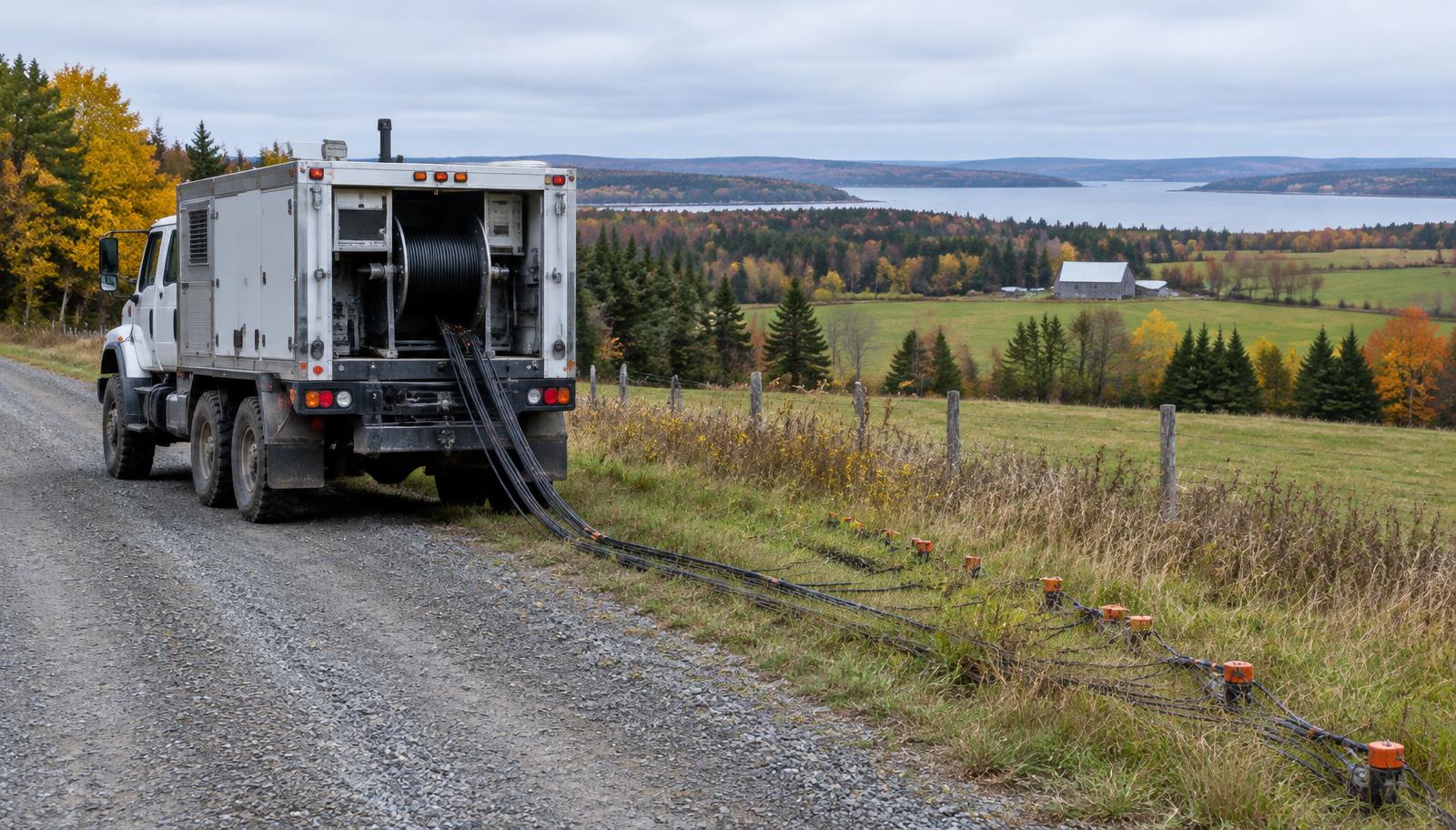 Mining and ResourcesQIMC Completes a 63.7-Kilometre Seismic Survey in Nova ScotiaQuebec Innovative Materials Corp. (CSE: QIMC) said on 14 October 2026 that it had finished acquiring 63.7 line-kilometres of 2D seismic across its Cumberland County ground in Nova Scotia, 13.7 kilometres more than planned, and the data is already with a Calgary processor. The programme was delivered ahead of plan on ground where free gas has already reached surface once, with a treasury of about C$14.84 million against liabilities of about C$1.92 million.Élise Galarneau · October 15, 2026 · 8 min
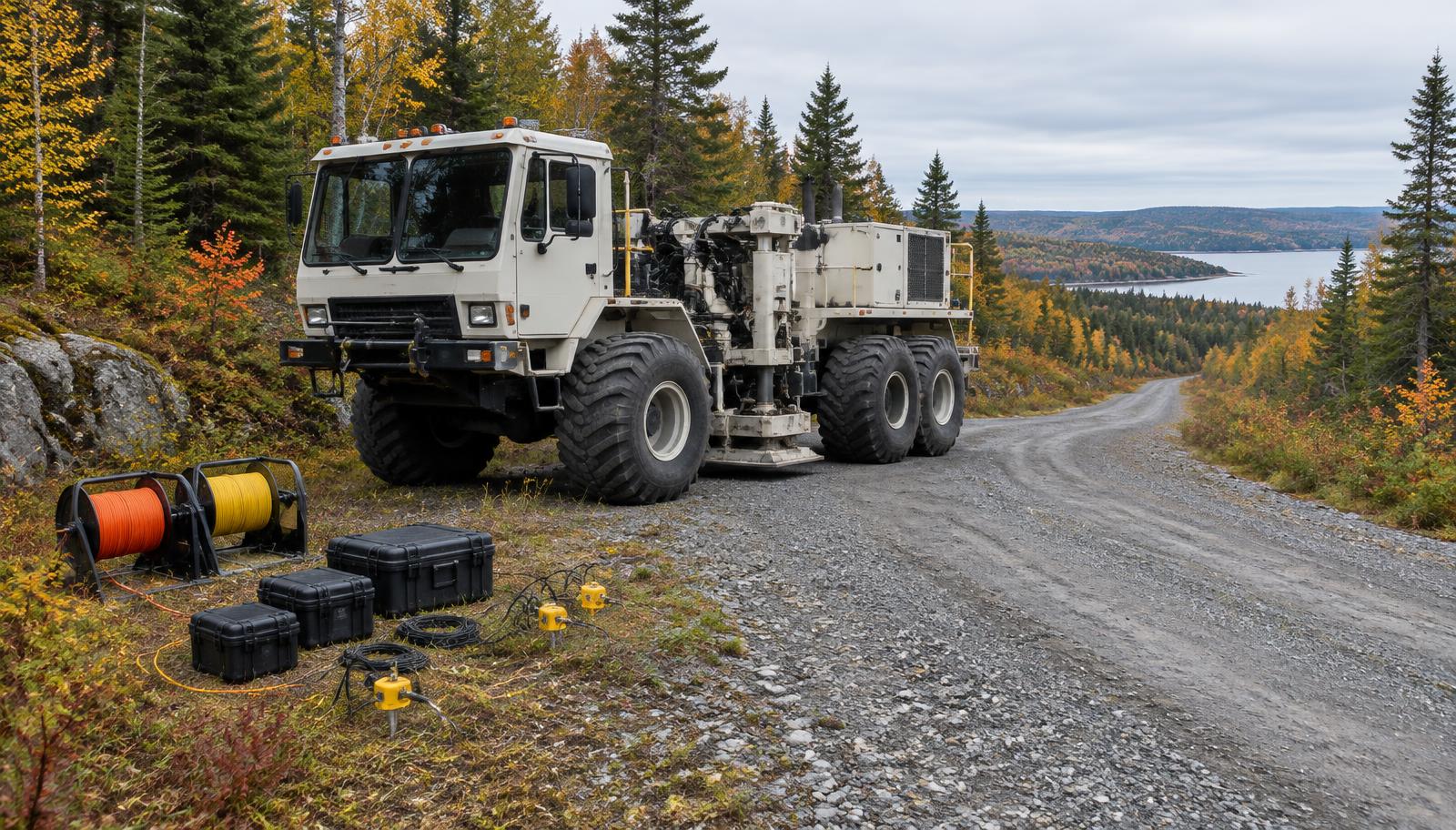 Mining and ResourcesQIMC Hires a Calgary Firm to Process 50 Kilometres of SeismicQuebec Innovative Materials Corp. (CSE: QIMC) engaged Calgary’s Earth Signal Processing Ltd. on October 1, 2026 to process about 50 line-kilometres of two-dimensional seismic from Apple River and Bennett Hill, Nova Scotia. The appointment adds experienced processing support to a better-defined hydrogen and helium exploration programme. The images can help focus drilling targets, while pressure and flow measurements remain later steps with no announced date.Daniel Okoye · October 2, 2026 · 7 min
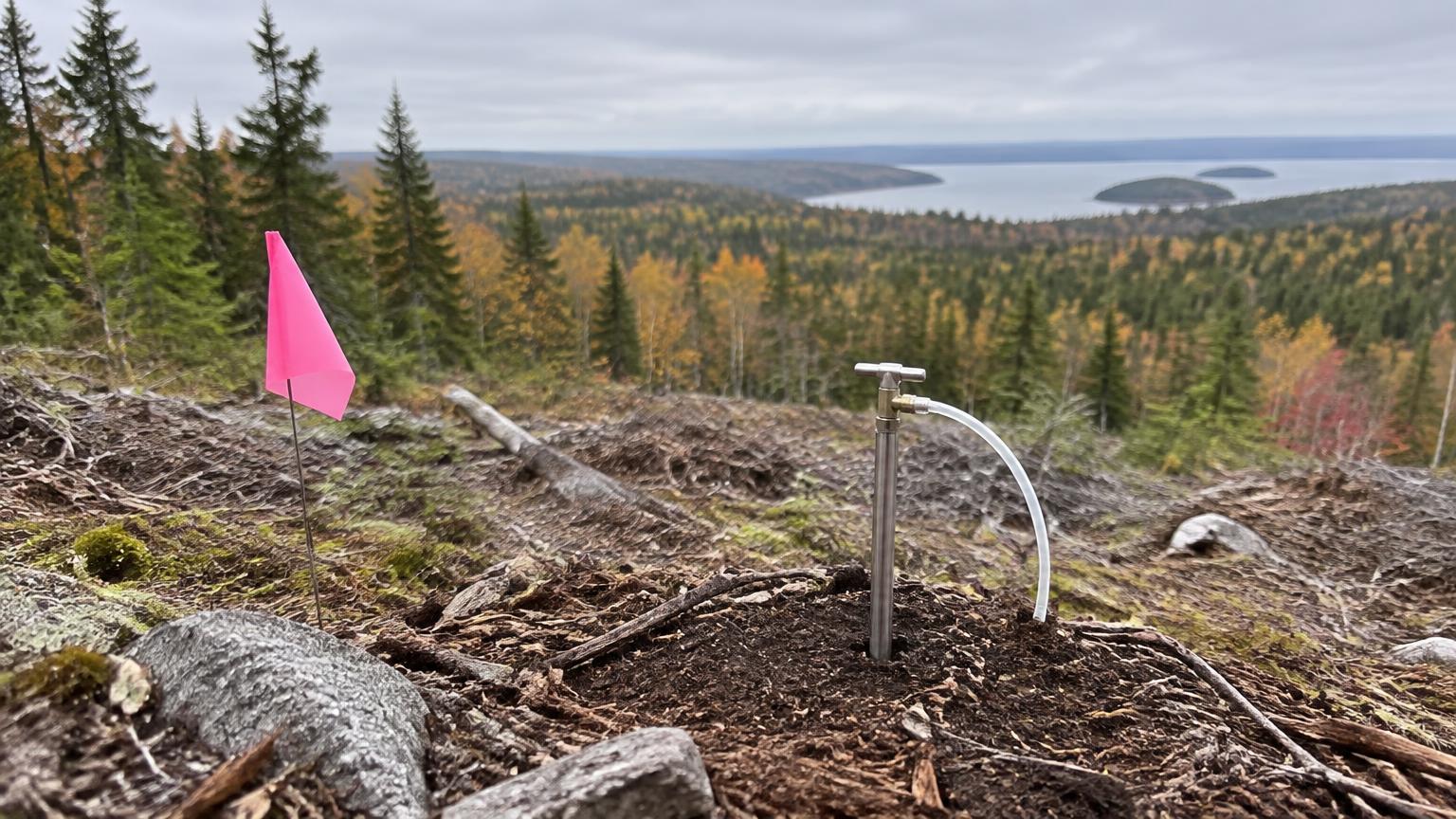 Mining and ResourcesFive Times More Helium Anomalies Near a Fault: QIMC's 526-Sample Survey in Nova ScotiaQuébec Innovative Materials Corp. (CSE: QIMC) reported on September 22, 2026 that a 526-sample helium soil-gas survey across 28 lines at New Salem-Apple River, Nova Scotia, identified fault-associated helium zones, with a peak of 5.864 parts per million by volume against a district background of 5.40 ppmv. The survey's load-bearing number is not the peak. It is the finding that anomalous stations occur roughly five times more often within 1.5 kilometres of a mapped fault than beyond two kilometres, which is why the 2D seismic programme grew from 42 to about 50 line-kilometres.Priya Sandhu · September 23, 2026 · 8 min
Follow this story
Follow QIMC.CN — the next Maple piece on this company, plus the Maple Morning Debrief before the open.
Follow and ask
Get more of our Canadian market coverage in Google Top Stories.
Opinion
This article expresses the author's personal views, is separate from news reporting and is not investment advice.
Sources and references (7)
- QIMC, Completes Expanded 63.7 km Seismic Program in Nova Scotia, 14 October 2026
- System for Electronic Disclosure by Insiders, insider transaction detail for Quebec Innovative Materials Corp., 1 to 15 October 2026
- QIMC news archive, including the soil-gas release of 6 October 2026 and the DDH-26-05 release of 1 September 2026
- SEDAR+ continuous disclosure filings
- The Maple Markets, QIMC Completes a 63.7-Kilometre Seismic Survey in Nova Scotia, 14 October 2026
- The Maple Markets, QIMC Finds a Wet-Gas Signature in 86% of Nova Scotia Soil Samples, 6 October 2026
- Quebec Innovative Materials Corp., Condensed Interim Consolidated Financial Statements for the three and nine months ended June 30, 2026 (unaudited)
Cite this analysis
Please attribute The Maple Markets and link to the original page.
Élise Galarneau (October 15, 2026). 63.7 Kilometres of QIMC Seismic Data Reach the Processing Stage. The Maple Markets. https://themaplemarkets.ca/en/newsroom/quebec-innovative-materials-63-7-kilometre-seismic-programme-ishttps://themaplemarkets.ca/en/newsroom/quebec-innovative-materials-63-7-kilometre-seismic-programme-is