
Can the New Congress End US Tariffs on Canada? Three Laws Decide
A Democratic House and Senate can rewrite the statutes behind every US tariff on Canadian goods, but ending a tariff over a presidential veto takes two-thirds of both chambers.
A Democratic Congress can repeal or rewrite the laws behind US tariffs on Canada, but it cannot end them alone: the President must sign the bill or two-thirds of both chambers must override a veto. As of November 7, 2026, the duties rest on three statutes, Section 232, Section 338 and Section 301, and the new Congress sits on January 3, 2027.
By Priya Sandhu9 min read
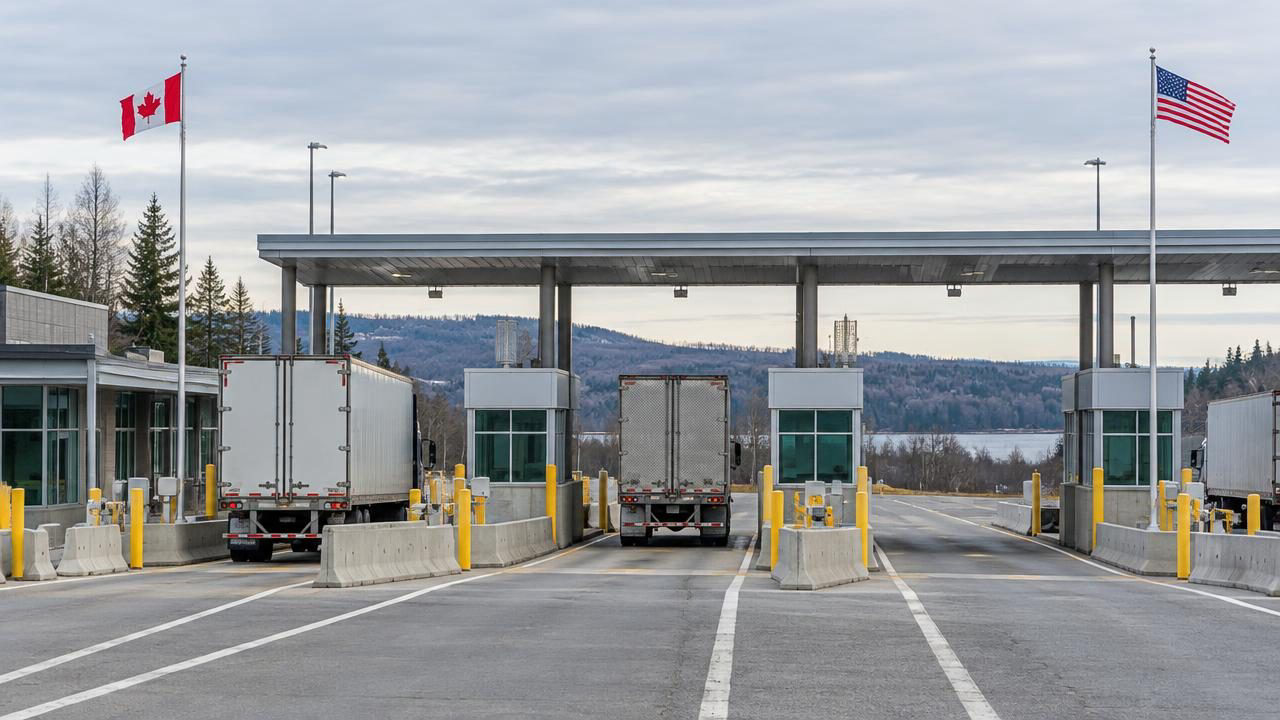
US tariff statutes in force on Canada
3
Section 232, Section 338 and Section 301, as of November 7, 2026, per the proclamations and the US Trade Representative.
Average US tariff on Canadian goods
7.5%
Bank of Canada, October 2026 Monetary Policy Report, measures as at October 22, 2026 (5.0% in July).
Canadian exports to the US that remain tariff-free
about 80%
Bank of Canada, October 2026 Monetary Policy Report.
Section 338 rate on listed Canadian goods
50%, on about US$20 billion of goods
in force since August 22, 2026; trade value per MLT Aikins' estimate.
New Congress sits
January 3, 2027
two days after the announced January 1, 2027 date for a 50% rate on Canadian autos, parts and steel.
A Democratic Congress can repeal or rewrite the laws behind the US tariffs on Canadian goods, but it cannot end them on its own: the President has to sign the bill, or two-thirds of the House and the Senate have to override his veto. The Congress elected on November 3 takes its seats on January 3, 2027, and the tariffs it would have to undo rest on three separate US laws.
That answer is narrower than the election night headlines, and more useful, because each law has its own limits and its own exit.
Who has the power to put a tariff on Canadian goods?
Congress does, and the President acts only through powers Congress has delegated by statute. The US Constitution gives the power to lay duties to Congress, and over the last century Congress handed slices of it to the President in specific trade laws.
The US Supreme Court drew that line on February 20, 2026. In Learning Resources, Inc. v. Trump, decided 6-3 with Chief Justice John Roberts writing for the majority, the Court held that the International Emergency Economic Powers Act (IEEPA), a 1977 sanctions law, does not authorize the President to impose tariffs. The opinion noted that when Congress has delegated tariff powers it has done so "in explicit terms, and subject to strict limits", according to the Congressional Research Service's summary of the ruling.
For Canada, the ruling ended the fentanyl and border tariffs that had been imposed under IEEPA in 2025. It did not touch the other statutes, and the Court did not decide whether importers get their IEEPA duties back. Justice Brett Kavanaugh, in dissent, wrote that the United States "may be required to refund billions of dollars to importers". As of November 7, 2026, the question had no answer.
What replaced the tariffs the Court struck down?
A temporary surcharge filled the gap for exactly the period the law allowed. Presidential Proclamation 11012, signed the day of the ruling, imposed a 10 per cent duty on most imports from February 24.
It used Section 122 of the Trade Act of 1974, a provision that lets the President add a surcharge of up to 15 per cent for no more than 150 days to deal with a balance-of-payments problem.
For Canada, goods entering duty-free as Canadian or Mexican under the Canada-United States-Mexico Agreement (CUSMA, called USMCA in the US) were excluded, and so were energy products and certain critical minerals. The proclamation ran "through 12:01 a.m. eastern daylight time on July 24, 2026", and only an Act of Congress could have extended it. Congress passed none, so the surcharge lapsed on July 24.
Section 122 is the one tariff tool where Congress's silence is enough to end it.
Which laws carry the US tariffs on Canada now?
Three statutes do the work, and they reach different goods on different terms.
| Statute | What it covers for Canada | Rate | In force since | What can end it |
|---|---|---|---|---|
| Section 232, Trade Expansion Act of 1962 | Metals (steel, aluminum, copper) and derivatives; autos and parts; softwood lumber; some furniture | 10% to 50%, by product | Autos April 3, 2025; lumber October 14, 2025; metals as revised April 6, 2026 | A presidential proclamation, or a new law |
| Section 338, Tariff Act of 1930 | Goods listed in three proclamations, from machinery to dairy and alcohol | 50% | August 22, 2026 | A presidential proclamation, a court ruling, or a new law |
| Section 301, Trade Act of 1974 | Most goods, under a forced-labour action covering 60 economies | 10% | July 24, 2026 | A decision of the US Trade Representative, or a new law |
The Section 301 rate is from the US Trade Representative's July 2026 release; the Section 232 and Section 338 dates and rates are from the proclamations, as summarized by the law firm Osler on August 26, 2026.
The Bank of Canada supplies the number that ties the table together. In its October 2026 Monetary Policy Report it estimated the average US tariff on Canadian goods at 7.5 per cent, up from 5.0 per cent in its July report, and said "about 80% of Canadian goods exports to the United States remain tariff-free." The Bank assumes most exemptions for CUSMA-compliant goods remain, and it lists energy products and potash as exempt from the newest tariffs, along with critical minerals.
Section 232 is the oldest and broadest of the three. It lets the President "adjust" imports he finds threaten national security after a Commerce Department investigation, and it sets no rate cap. Section 301 is the US Trade Representative's tool against foreign practices it finds unreasonable; Canada sits in the 10 per cent group, per the US Trade Representative's July 2026 release, and goods entered duty-free under CUSMA are exempt under US Customs and Border Protection's July 23, 2026 entry guidance, as summarized by the customs broker GHY.
Why does Section 338 carry so much weight this year?
It is the only one of the three written for a single country's treatment of US goods, and, like Section 232, it carries no general exemption for CUSMA-qualifying goods, per Covington & Burling and Osler. Section 338 of the Tariff Act of 1930 lets the President add duties of up to 50 per cent on a country he finds discriminates against US commerce, with no investigation or hearing first. It had never been used to impose a tariff before 2026.
President Trump signed three Section 338 proclamations on July 20, 2026, one each for alcoholic beverages, dairy and motor vehicles, each resting on a finding that a Canadian measure discriminates against US goods. The proclamations set an effective date of August 19, 30 days after signing; on August 18 the President suspended the duties for three more days while talks continued, and they took effect at 12:01 a.m. on August 22 after the talks broke down, according to Covington & Burling's account of the proclamations.
The 50 per cent rate applies to about US$20 billion of Canadian goods, close to 5 per cent of what the US imported from Canada in 2024, by MLT Aikins' estimate. Energy, potash and critical minerals are excluded. So are fish, and any goods already under Section 232.
Canada answered with counter-tariffs on about C$28 billion of US goods, by the Bank of Canada's count, in force from September 8, according to Osler.
No US court has ruled on Section 338, and Covington & Burling wrote that its first use "raises questions that may prompt legal challenges."
Can the new Congress repeal these tariffs?
It can pass a bill to repeal or limit any of them, and the hard part is the veto. Each statute is ordinary law, so a majority in both chambers can amend it, repeal it, or require Congress's approval before a new tariff takes effect. A President who disagrees can veto, and an override needs two-thirds of those voting in each chamber.
Congress has already shown it can find a simple majority on Canada. On February 11, 2026, the House voted 219-211 to disapprove the emergency behind the IEEPA tariffs on Canada, with six Republicans voting yes, after the Senate had passed two similar resolutions, according to the office of Representative Richard Neal, the senior Democrat on the House Ways and Means Committee. None of those votes reached two-thirds.
Peter Harrell, who writes on trade policy and previously worked on international economics at the White House, put the arithmetic in a November 6 post: a tariff bill would need "roughly a dozen Republican votes in the Senate and thirty in the House" to survive a veto, and he wrote that the President "is not going to sign any legislation that substantially constrains his tariff powers." That is his assessment, not a count of declared votes. He listed two routes around a veto, attaching tariff language to bills the President needs, such as spending bills or the defence bill, and making future Section 232 tariffs subject to a vote in Congress. He proposed repealing Section 338 outright.
There is a precedent for that kind of challenge. In April 2025 Senators Ron Wyden and Rand Paul, joined by Chuck Schumer and Tim Kaine, introduced a resolution to end the emergency behind the global tariffs. Wyden said then that "no president should have the power to tax everything Americans buy without being accountable to Congress."
The timing works against speed. The current Congress, with Republican majorities, serves until January 3, 2027. Any bill from the new one starts after that date.
What happens on January 1, 2027?
A higher rate on Canadian vehicles, parts and steel is due two days before the new Congress sits. On August 24, 2026, President Trump posted that tariffs on Canadian vehicles, parts and steel would rise to 50 per cent on January 1, 2027, as reported by Fox Business that day. As of November 7, no proclamation setting that rate had been published, and the reports did not name the statute it would use.
Autos and steel are already tariffed under Section 232, a law with no rate cap and no time limit, which the Supreme Court in February treated as distinct from IEEPA. Ontario Premier Doug Ford said on November 4 that the "January tariffs are still on the table," per Global News.
Where does CUSMA fit in all of this?
CUSMA governs which Canadian goods qualify for duty-free treatment, and since July it is up for review every year. The agreement entered into force on July 1, 2020, for 16 years. At the first joint review on July 1, 2026, the Canadian and Mexican governments supported renewal, and US Trade Representative Jamieson Greer said "the United States did not agree to renew the USMCA in its current form," according to the Congressional Research Service's September 29 report on the review.
Under Article 34.7 of the agreement, that triggers a joint review every year until all three governments confirm an extension in writing, or until the agreement expires on July 1, 2036. Under Article 34.6, any party may withdraw on six months' written notice.
Congress's formal role is mostly consultation. The USMCA Implementation Act requires the US Trade Representative to consult the House Ways and Means and Senate Finance committees before each review and to report to them ahead of every later annual one. Changes to the agreement that require changes to US law would need a new implementing bill, and that would give Congress a vote. In 2020 the original deal passed 89-10 in the Senate and 385-41 in the House, Harrell noted.
For Canada, the annual cycle means the duty-free share the Bank of Canada counts is negotiable every summer until 2036. What that does to investment and the loonie over a decade is the subject of Maple's longer pillar piece published this morning.
What is unresolved?
Four matters are open as of November 7, 2026. The Supreme Court left aside refunds for importers who paid the IEEPA duties. Section 338 has had no court ruling. No proclamation has set the January 1 rate on autos and steel, or named its statute. The fourth is political: whether the new Congress attaches tariff limits to a bill the President cannot afford to veto.
The first three have a date or a forum attached, from the January 1 rate to the 2027 CUSMA review; the fourth would play out in the spending and defence bills of the new Congress. The Bank of Canada held its tariff assumptions constant through its projection when it raised its policy rate to 2.5 per cent on October 28, a decision Maple covered here.
The power to tax imports was always Congress's. Since February, the question for Canada is how much of it Congress is willing to take back, and with whose votes.
Disclosure
Transparency note. This is an independent due-diligence analysis and editorial opinion piece produced by The Maple Markets editorial desk. It is not sponsored, promoted or commissioned, and no compensation of any kind has been received from any issuer, government body or organisation named in this article, or any party acting on their behalf. The analysis is based on public disclosure available as of the publish date; every figure is attributed to its primary source. The Maple Markets and its authors may hold positions in securities mentioned; nothing here is a recommendation to buy, sell or hold any security, and readers should not treat it as investment advice. Past disclosure does not guarantee future results. Policies: Editorial Standards · Financial Disclaimer.
Read next
Auch auf Deutsch: Kann der neue US-Kongress die Zölle auf Kanada beenden? Drei Gesetze entscheiden
 MacroUS Midterms and Canada's Economy: What Congress Can Change Before 2036Democrats won control of both chambers of the US Congress in the November 3, 2026 midterm elections and take their seats on January 3, 2027. The tariffs on Canadian goods rest on statutes a president can use on his own authority, so changing them takes a law that survives a veto or a negotiated deal. For Canada's economy over the next decade, the larger force is the yearly review of CUSMA, which now runs to July 1, 2036, and how businesses invest while those reviews continue.Hannah Kuan · November 7, 2026 · 13 min
 MacroCanada's Economy Was Flat in August, and the Loonie Ended October FirmerReal gross domestic product was essentially unchanged in August 2026, Statistics Canada said on October 30, 2026, the second flat month in a row, and was 1.5 per cent higher than in August 2025. An advance estimate shows a 0.1 per cent decline in September, which the agency said leaves third-quarter growth at 0.3 per cent. The Canadian dollar was worth US$0.7163 on October 30 by the Bank of Canada's daily average, up from its 2026 low of US$0.7007 on October 9, and the 2-year and 10-year Government of Canada benchmark yields were 3.36 and 3.84 per cent on October 29.Marc Belzile · October 31, 2026 · 8 min
 MacroCanada Now Lets Its Smaller Listed Companies Report Twice a YearKinross, Alamos, Eldorado and Cameco filed their third-quarter numbers between October 28 and 30. Venture issuers on the TSXV and the CSE have until November 29, and under a Canadian Securities Administrators order in force since March 19, 2026, an eligible one can report every six months instead of every three. Here is how the calendar works, what the order changes and what it leaves in place.Priya Sandhu · November 1, 2026 · 9 min
Get the Maple Morning Debrief
Yesterday's close, overnight, and what to watch before the open — in your inbox by 6 a.m. ET. Free, and one click to unsubscribe.
Follow and ask
Get more of our Canadian market coverage in Google Top Stories.
Sources and references (16)
- Bank of Canada, Monetary Policy Report October 2026, tariff assumptions
- Office of the US Trade Representative, USTR takes action in forced labor Section 301 investigations, July 2026
- Federal Register, Proclamation 11012, temporary import surcharge under Section 122, February 25, 2026
- Proclamation 11048, Section 338 duties on goods of Canada (motor vehicles), July 20, 2026
- Global Affairs Canada, CUSMA text, Chapter 34, Final Provisions
- Congressional Research Service, Supreme Court rules against tariffs imposed under IEEPA (LSB11398)
- Congressional Research Service, USMCA Joint Review: Process and Role of Congress (R48787), September 29, 2026
- Office of Representative Richard Neal, House votes to disapprove of Trump's Canada tariffs, February 11, 2026
- US Senate Finance Committee, Wyden, Paul, Schumer and Kaine resolution, April 8, 2025
- Osler, Section 338 tariffs and Canada's retaliatory surtaxes: current landscape, August 26, 2026 (via)
- GHY International, USTR Section 301 forced labor action on 60 economies and CBP guidance, July 2026 (via)
- Covington & Burling, Section 338 tariffs on Canada take effect, August 31, 2026 (via)
- MLT Aikins, What you need to know about the Section 338 proclamations (via)
- Peter Harrell, What should the new Democratic Congress do on trade, November 6, 2026 (via)
- Fox Business, Trump says 50% tariffs on Canadian vehicle, steel imports to hit Jan 1, August 24, 2026 (via)
- Global News, US-Canada trade after the midterms, November 4, 2026 (via)
Cite this analysis
Please attribute The Maple Markets and link to the original page.
Priya Sandhu (November 7, 2026). Can the New Congress End US Tariffs on Canada? Three Laws Decide. The Maple Markets. https://themaplemarkets.ca/en/newsroom/can-a-democratic-congress-end-the-us-tariffs-on-canada-and-who-controlshttps://themaplemarkets.ca/en/newsroom/can-a-democratic-congress-end-the-us-tariffs-on-canada-and-who-controls