
Five Categories Decide What a Canadian Miner May Publish
National Instrument 43-101 is written mostly as a prohibition, and the line it draws is what separated Grid Metals' maiden tonnage from Lundin Gold's eight-kilometre gold trend last week.
Twenty of the twenty-three stories The Maple Markets ran last week turned on the gap between a mining milestone and a mining result. Canadian securities law draws that gap in writing: NI 43-101 forbids an issuer from publishing a quantity or grade for any deposit it has not placed in one of five categories. Grid Metals, Lundin Gold, Hudbay and Aris Mining each sat on a different rung of that ladder in the same seven days.
By Daniel Okoye10 min read
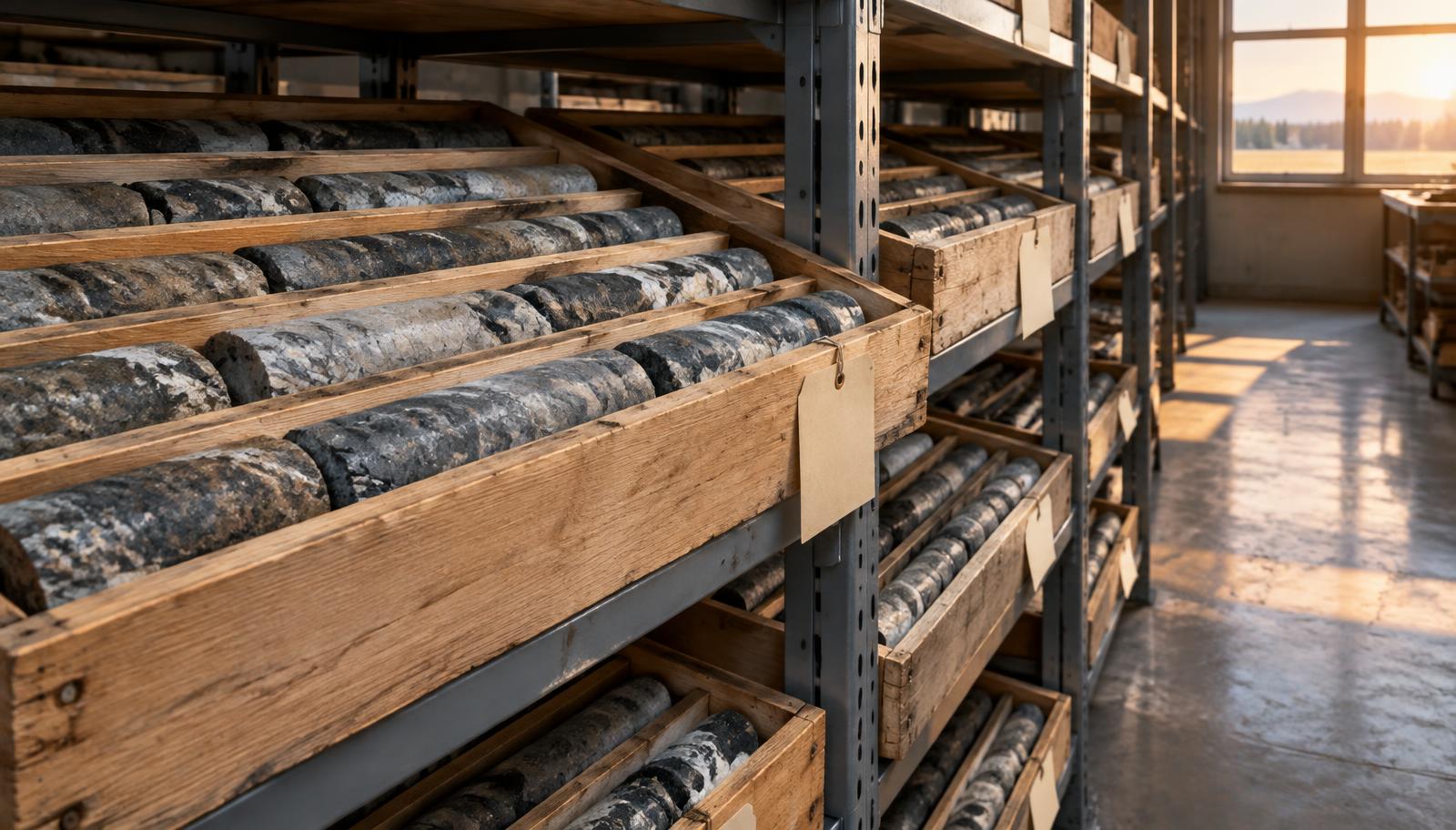
inferred, indicated and measured mineral resource; probable and proven mineral reserve
Five categories
the only classifications under which NI 43-101 section 2.3(1)(a) permits a Canadian issuer to publish a deposit's quantity or grade
NI 43-101 section 4.2(5)(a)(iii) deadline to file the supporting technical report after first-time disclosure of a resource or reserve; Grid Metals' falls 14 November 2026 and Hudbay's 12 November 2026
45 days
Grid Metals' maiden measured resource at Lucy South, effective 25 September 2026, signed by Rohan Millar, P.Geo., of SGS Geological Services
51,500 tonnes at 2.58% Cs₂O
Hudbay's proven and probable Snow Lake reserves reported 28 September 2026, reserve life to 2043, roughly 524 times the Lucy South tonnage
27.0 million tonnes, about 2.0 million ounces gold
Canadian exploration and deposit appraisal spending intentions for 2026, C$2.91 billion of it by juniors, per Natural Resources Canada
C$5.3 billion
On 30 September 2026 Grid Metals Corp. published a tonnage for its Lucy South deposit at the Falcon West property. The rock had not changed that week. What changed is that an independent geologist had signed an estimate for it, and under Canadian securities law that signature is the difference between a company that may print a tonnage and one that may not.
The estimate carries an effective date of 25 September 2026 and was prepared by Rohan Millar, P.Geo., of SGS Geological Services, whom the company identifies as an independent qualified person as defined by National Instrument 43-101. The numbers he signed: 51,500 tonnes grading 2.58 per cent caesium oxide and 1.47 per cent lithium oxide in the measured category, with a pollucite zone within it of 15,600 tonnes grading 5.19 per cent caesium oxide, quantified above a base case cut-off of 0.2 per cent caesium oxide.
Last week every Canadian mining story of consequence turned on the same distinction, and most of them said so in the headline. An eight-kilometre gold trend was not a resource. A reserve statement running to 2043 was not a valuation. A licensing resolution in Colombia was not a construction decision. Forty-five drill rigs were not an ounce of anything. Those are not editorial judgements. They are the rungs of a ladder written into Canadian law, and the law is unusually explicit about what a company may say while standing on each one.
The instrument works by telling companies what not to say
Most disclosure rules set out what has to be included. NI 43-101 spends much of its length forbidding things.
Its section 2.1 requires that all disclosure of scientific or technical information about a material mineral project be "based upon information prepared by or under the supervision of a qualified person" or "approved by a qualified person." A qualified person is defined as an engineer or geoscientist with a university degree in a relevant area of geoscience or engineering and at least five years of relevant experience. Everything technical a Canadian mining issuer publishes passes through that person.
Then section 2.3(1)(a) closes the door on the number people most want. An issuer "must not disclose the quantity, grade, or metal or mineral content of a deposit that has not been categorized as an inferred mineral resource, an indicated mineral resource, a measured mineral resource, a probable mineral reserve, or a proven mineral reserve."
Five categories. Outside them, a tonnage or an ounce count is not permitted disclosure in Canada, whatever a company believes is in the ground. Section 2.2 adds that the categories must be reported separately and that inferred resources must never be added to the other two. The meanings of all five come from the CIM Definition Standards, which the instrument incorporates by reference rather than restating.
The practical effect is that a Canadian mining headline can usually be placed on the ladder by what kind of number it contains.
| Rung | What must exist | What may be published | The document that follows |
|---|---|---|---|
| Exploration target | A geological concept with enough sampling to frame it | Quantity and grade as ranges only, with the conceptual caution given equal prominence | None required |
| Drill result | Assays prepared or approved by a qualified person | The intercept: a grade averaged over a length of core, hole by hole | None required |
| Mineral resource | Reasonable prospects for eventual economic extraction | Tonnes and grade by category, reported separately | Technical report on SEDAR+ within 45 days of first disclosure |
| Mineral reserve | Modifying Factors applied to a measured or indicated resource | The economically mineable part, with the study behind it | Technical report on SEDAR+ within 45 days of first disclosure |
| Construction decision | Permits, financing and a board resolution | Not governed by the instrument | Nothing filed under NI 43-101 |
A drill hole measures rock, not a deposit
Lundin Gold reported on 24 September 2026 that hole BLP-2026-553 returned 204.26 grams of gold per tonne over 3.05 metres from a depth of 140.25 metres at its Bonza Sur target near Fruta del Norte in Ecuador. Other holes in the same release returned 28.05 grams per tonne over 4.20 metres and, at the Quebrada Dorada target, 6.53 grams per tonne over 13.05 metres. The company described an epithermal gold trend extending more than eight kilometres.
A grade of 204.26 grams per tonne means that if a tonne of rock identical to that core were processed, about 204 grams of gold would come out of it. The measurement applies to a cylinder of core 3.05 metres long, which weighs a few tens of kilograms. It says nothing about how much rock of that quality exists, because nobody has yet estimated a volume.
So the release carried no mineral resource or reserve estimate for either target, and could not have. Under section 2.3(2) a company in that position may publish a potential quantity and grade only as ranges, and only if the disclosure states with equal prominence that the figures are "conceptual in nature, that there has been insufficient exploration to define a mineral resource and that it is uncertain if further exploration will result in the target being delineated as a mineral resource." The eight kilometres is a strike length. It is a map measurement, not a quantity of metal.
The first rung that carries a tonnage
The CIM standards define a mineral resource as a concentration of material of economic interest "in such form, grade or quality and quantity that there are reasonable prospects for eventual economic extraction." The confidence categories separate on how much evidence supports the estimate. An inferred resource rests on limited geological evidence and sampling. An indicated resource is estimated with enough confidence to support mine planning and an evaluation of economic viability. A measured resource supports detailed mine planning and a final evaluation.
Grid Metals placed the whole of Lucy South in the measured category, the most confident of the three, which is uncommon for a first estimate. The release also carried the sentence the standards require: "Mineral resources which are not mineral reserves do not have demonstrated economic viability."
That sentence is the whole content of this rung. Reasonable prospects for eventual economic extraction is a geologist's judgement that the material is worth evaluating. It is not a finding that mining it would pay.
Two clocks started at Grid Metals, and they are different lengths
First-time disclosure of a mineral resource that is a material change triggers section 4.2(1)(j), and section 4.2(5)(a)(iii) sets the deadline: the supporting technical report must be filed "45 days after the date of the disclosure." Grid Metals' release states the estimate is supported by a technical report to be filed on SEDAR+ within 45 days, which from 30 September 2026 falls on 14 November 2026. Until that report lands, the signed estimate exists in a press release and the assumptions behind it do not exist publicly at all.
A second clock in the same story is not the instrument's. Under a joint venture agreement dated 20 July 2026, as reported by The Maple Markets on 1 October in Grid Metals Reported Its First Resource, and a 90-Day Clock Started, Avenir Minerals gained an option that becomes exercisable on the fifteenth day after Grid announces a mineral resource estimate, after which Avenir has 90 days to subscribe for up to 19.99 per cent of Grid's shares at a 10 per cent premium to the 30-day volume-weighted average price. The 90 days is contractual and concerns ownership. The 45 days is regulatory and concerns evidence. The resource announcement starts both, and only one of them produces a document anyone can read.
The 45 days is also not absolute: section 4.2(7) extends the deadline to 180 days in defined circumstances. The filing date, not the announcement date, is when the assumptions become checkable.
Economically mineable is a separate test, and it is not a geological one
A mineral reserve, in the CIM definition, is "the economically mineable part of a measured and/or Indicated Mineral Resource." Getting there means applying what the standards call Modifying Factors: "mining, processing, metallurgical, infrastructure, economic, marketing, legal, environmental, social and governmental factors." Most of that list has nothing to do with rock.
The conversion rules are strict. An inferred resource must not be converted to a reserve at all. An indicated resource may become only a probable reserve. A measured resource may become a proven or a probable reserve.
Hudbay Minerals reported on 28 September 2026 that proven and probable reserves at its Snow Lake operations in Manitoba stood at 27.0 million tonnes containing about 2.0 million ounces of gold, an increase of 7.5 million tonnes and 124,000 ounces against the January 2026 statement, extending the reserve mine life to 2043, or 18 years. The company said the supporting NI 43-101 technical report would be filed on its SEDAR+ and SEC profiles within 45 days of that date, which falls on 12 November 2026.
Divide Hudbay's 27.0 million tonnes by Grid Metals' 51,500 tonnes and the Snow Lake reserve is roughly 524 times the maiden Lucy South estimate. The two announcements arrived two days apart and both used the vocabulary of the same instrument. They are not comparable quantities, and the ratio understates the distance, because one figure survived the Modifying Factors list and the other has not been put to it.
Eighteen years of reserve life is a statement about what is economically mineable under one company's stated assumptions as of one date. Change the gold price assumption or the cost assumption and the tonnage that qualifies changes with it. The reserve is the output of a model, disclosed with its effective date, which is why the effective date matters as much as the tonnage.
Aris Mining holds the reserve and not the permission
At the top of the ladder the instrument runs out.
Aris Mining's Soto Norte project in Santander, Colombia carries mineral reserves with an effective date of 18 August 2025 of 20.3 million tonnes grading 7.00 grams of gold per tonne, or 4.6 million ounces, and a pre-feasibility study dated 3 September 2025 putting initial capital at US$625 million. By the measure of Canadian disclosure law, that is as far up the ladder as a project goes.
None of it permits a shovel. On 28 September 2026 Colombia's Ministry of Environment issued Resolution 1277, revoking an extension of a temporary reserve area created by Resolution 0221 of 3 March 2025 over roughly 75,345 hectares, which returned the restriction's expiry to 4 March 2027 from 4 March 2029. Construction cannot begin until the required environmental licence is obtained, and no date for that licence has been disclosed. NI 43-101 governs what Aris may say about the ounces. It has nothing to say about whether a foreign ministry will issue a permit.
Where Canada's exploration money actually sits
The ladder is not an abstraction for a Canadian investor, because Canada is where most of this spending and most of these listings are.
Natural Resources Canada puts Canadian exploration and deposit appraisal spending intentions for 2026 at C$5.3 billion, of which C$2.91 billion is junior company spending and C$2.43 billion senior. That follows a preliminary C$4.4 billion in 2025 and C$4.2 billion in 2024. The Toronto Stock Exchange reports that about 40 per cent of the world's public mining companies are listed on TSX and TSXV, that mining issuers raised C$16 billion of equity capital in 2025 across 54 new mining listings, and that mining market capitalisation on the two exchanges was C$1.1 trillion, all as of 31 December 2025.
Almost all of that C$5.3 billion will be spent below the resource rung, on ground where section 2.3(1)(a) forbids publishing a quantity or a grade for the deposit at all. For most Canadian mining listings, then, the only quantities lawfully available are drill intercepts and conceptual ranges carrying mandatory cautions. A maiden resource estimate is the event that converts years of spending into a number anyone is allowed to repeat, and it is also the event that starts a 45-day clock on the document explaining how the number was built.
The effective date is the smallest figure in a resource release and the one that says which rung the company is standing on. Grid Metals' is 25 September 2026. Lundin Gold has none to give.
Transparency note. This is an independent due-diligence analysis and editorial opinion piece produced by The Maple Markets editorial desk. It is not sponsored, promoted or commissioned, and no compensation of any kind has been received from any issuer, government body or organisation named in this article, or any party acting on their behalf. The analysis is based on public disclosure available as of the publish date; every figure is attributed to its primary source. The Maple Markets and its authors may hold positions in securities mentioned; nothing here is a recommendation to buy, sell or hold any security, and readers should not treat it as investment advice. Past disclosure does not guarantee future results. Policies: Editorial Standards · Financial Disclaimer.
Read next
Auch auf Deutsch: Fünf Kategorien entscheiden, was ein kanadisches Bergbauunternehmen veröffentlichen darf
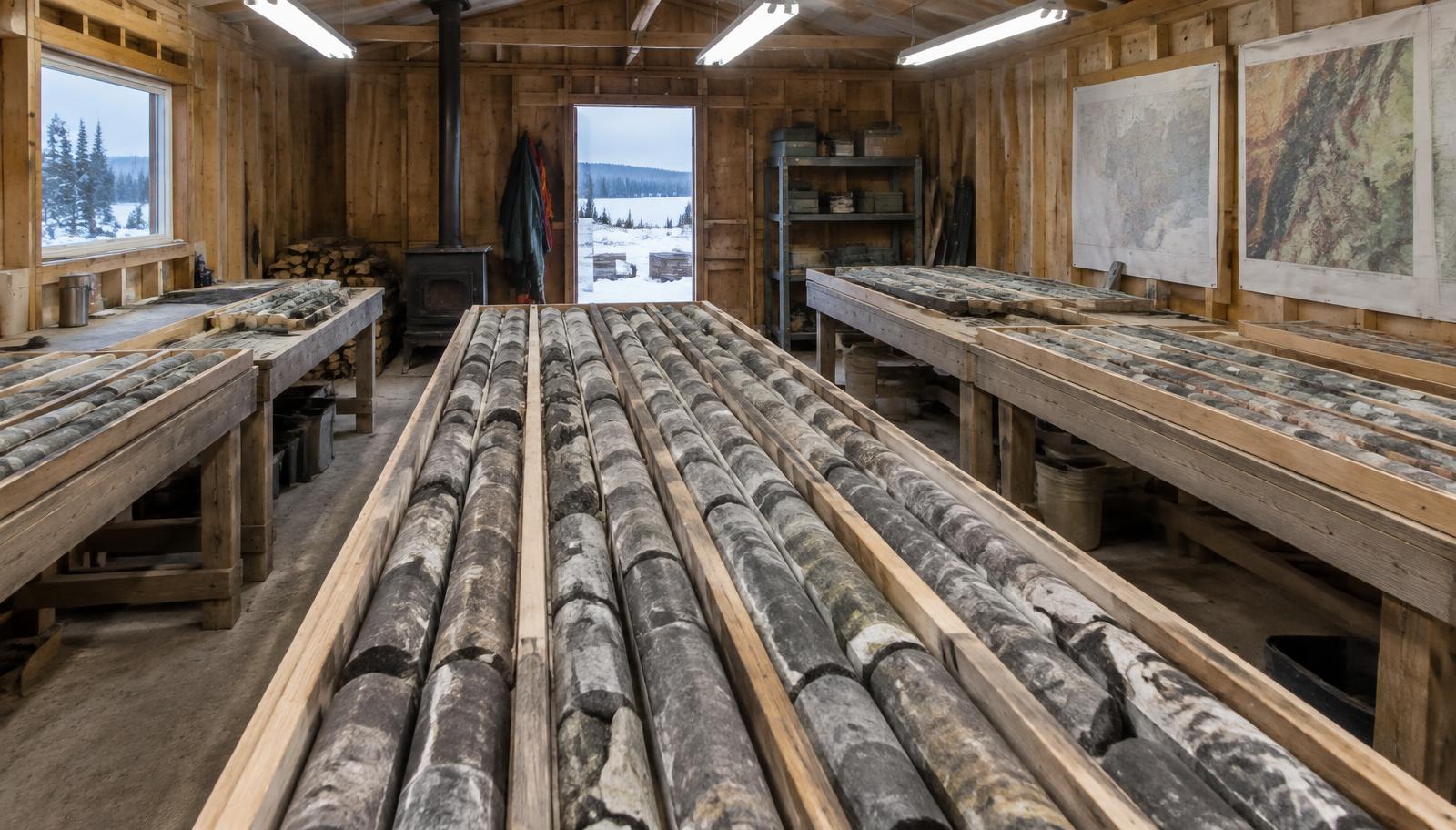 EconomyFour Things a Canadian Miner Can Say About a Hole in the Ground, and What Each Is WorthA Canadian explorer with no laboratory numbers rose 93.8 per cent on September 9, 2026. A company that published laboratory numbers fell 35 per cent the next day. Canadian mining disclosure runs on four separate stages of proof, and most of the confusion in a drill-results week comes from treating them as one.Priya Sandhu · September 13, 2026 · 9 min
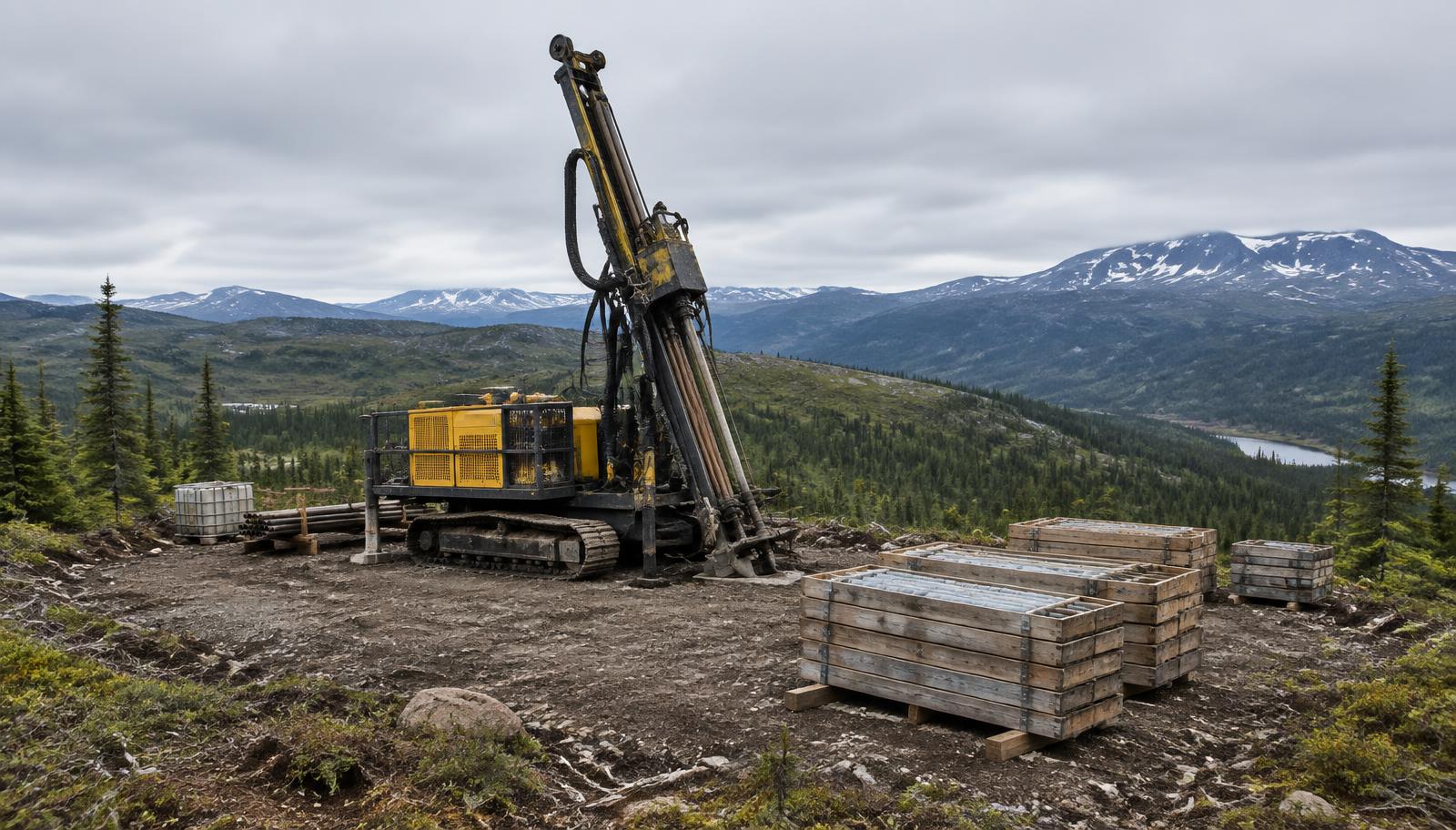 Mining and ResourcesEvergold Drills 7.7 Grams of Gold a Tonne at Its Golden Lion ProjectEvergold Corp. (TSXV: EVER) reported assays on 2 October 2026 from the first six of sixteen 2026 holes at the GL1 zone of Golden Lion in northern British Columbia. Hole GL26-031 returned 4.9 metres at 7.70 g/t gold and 186.0 g/t silver. All six holes hit gold. The shares closed at C$0.36, down 20 per cent, on about nineteen times average volume. True widths are not known, assays are uncapped, and ten holes remain at the laboratory.Daniel Okoye · October 2, 2026 · 8 min
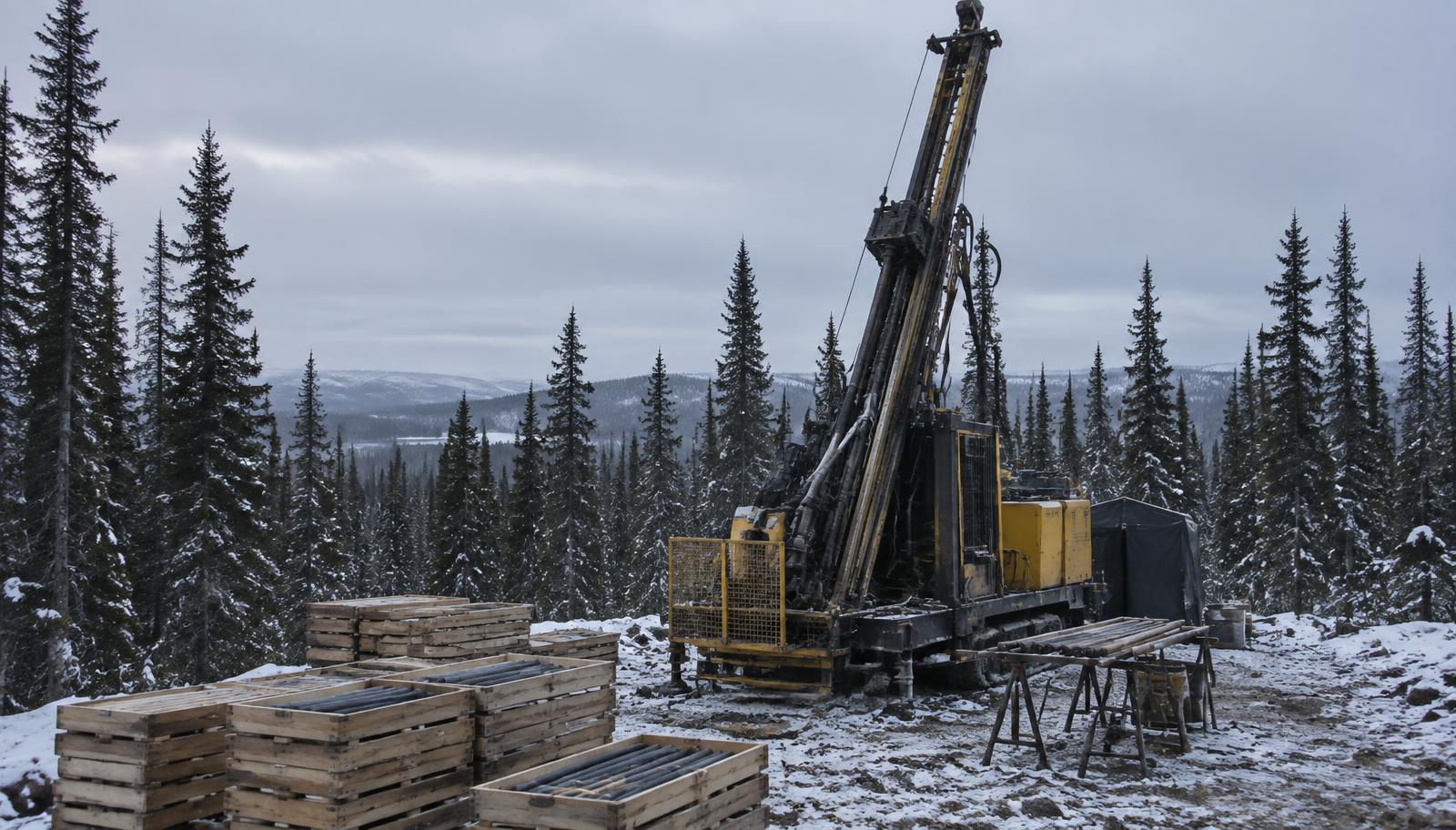 Mining and ResourcesA Kilometre From Its Nearest Hole, FireFox Gold Drilled 21 Metres of 4.13 g/t in LaplandFireFox Gold Corp. (TSXV: FFOX) reported on 16 September 2026 that hole 26MJ032 cut 21.0 metres averaging 4.13 g/t gold more than 650 metres from any previous drilling at Mustajarvi in Finnish Lapland. The shares closed at C$0.63, up 26.0 per cent on thirteen times average volume. Two earlier holes this month carried higher grades and moved nothing. What changed was the distance, and a paid listing that ran the same day.Priya Sandhu · September 17, 2026 · 7 min
Get the Maple Morning Debrief
Yesterday's close, overnight, and what to watch before the open — in your inbox by 6 a.m. ET. Free, and one click to unsubscribe.
Follow and ask
Get more of our Canadian market coverage in Google Top Stories.
Opinion
This article expresses the author's personal views, is separate from news reporting and is not investment advice.
Disclosure
Transparency note. This is an independent due-diligence analysis and editorial opinion piece produced by The Maple Markets editorial desk. It is not sponsored, promoted or commissioned, and no compensation of any kind has been received from any issuer, government body or organisation named in this article, or any party acting on their behalf. The analysis is based on public disclosure available as of the publish date; every figure is attributed to its primary source. The Maple Markets and its authors may hold positions in securities mentioned; nothing here is a recommendation to buy, sell or hold any security, and readers should not treat it as investment advice. Past disclosure does not guarantee future results. Policies: Editorial Standards · Financial Disclaimer. See the Financial Disclaimer.
Sources and references (9)
- NI 43-101 Standards of Disclosure for Mineral Projects (full instrument text)
- CIM Definition Standards on Mineral Resources and Mineral Reserves
- Hudbay Minerals news release, Snow Lake reserve and production update, 28 September 2026
- Grid Metals Corp., maiden caesium resource at Falcon West, 30 September 2026
- Aris Mining, Soto Norte developments, filed with the SEC
- Aris Mining, Soto Norte pre-feasibility study disclosure, filed with the SEC
- Natural Resources Canada, Canadian Mineral Exploration Information Bulletin
- Toronto Stock Exchange and TSX Venture Exchange, mining sector profile
- Lundin Gold, drill results from Bonza Sur and Quebrada Dorada, 24 September 2026
Cite this analysis
Please attribute The Maple Markets and link to the original page.
Daniel Okoye (October 4, 2026). Five Categories Decide What a Canadian Miner May Publish. The Maple Markets. https://themaplemarkets.ca/en/newsroom/intercept-resource-reserve-what-each-rung-of-canada-s-mineral-disclosurehttps://themaplemarkets.ca/en/newsroom/intercept-resource-reserve-what-each-rung-of-canada-s-mineral-disclosure